
Protected Species Surveys
ATEC, based in Northern Ireland, brings 30 years of dedicated experience to the field of protected species surveys.
Specialising in a comprehensive range of ecological services, ATEC plays a vital role in ensuring responsible development and conservation practices. Our expertise encompasses a wide array of protected species, including:
Bat Roost Potential Assessments (BRPs)
Bats are highly and strictly protected under schedule 2 of The Conservation (Natural Habitats etc.) Regulations (Northern Ireland) 1995 as amended.
The BRP Survey is non-invasive and is a form of Preliminary Ecological Assessment with the aims of determining if any more detailed surveys are required to inform the planning process and to identify any potential constraints to a proposed development.
The process used follows the guidelines recommended by the Bat Conservation Trust (BCT) (4th Edition Guidelines) and by the Chartered Institute of Ecology and Environmental Management (CIEEM).
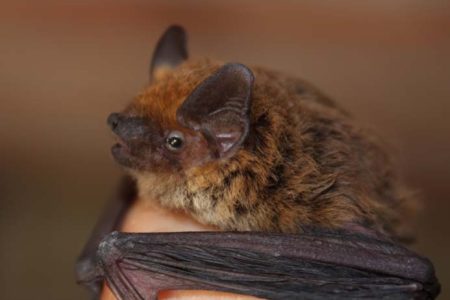
The Bat Roost Potential Survey (BRP) is not necessarily designed to identify the presence of roosting bats (although occasionally this is possible) since this is often difficult to do from only visual inspections.
Instead – the purpose of the BRP is to assess the likelihood of roosting bats being present at any time within a building or structure by the identification of Potential Roost Features (PRF’s) which may be suitable either as roosting sites for bats or as potential access points to a roost feature.
The survey normally involves an external inspection of any building within the site likely to be impacted by the proposed development looking for signs of bats and any features that bats could use for entry / exit and roosting (Potential Roost Features (PRFs)).
Binoculars can be used to inspect the exterior surfaces of any PRFs not entirely visible from ground level.
This information is used to assess the overall suitability of the building to support roosting bats and categorised as either ‘Negligible’, ‘Low’, ‘Moderate’ or ‘High’ bat roosting potential.
A general assessment of the roosting potential of mature trees is also normally carried out.
Any buildings or mature trees assessed as having bat roosting potential will require further detailed bat surveys undertaken at night between May and September using bat detectors and night vision aids (NVAs).
Badger Surveys
Badgers and their setts are legally protected under Schedule 5 of the Wildlife (Northern Ireland) Order 1985.
Badger surveys can take place at any time of year and may be required to support a planning application or when a badger sett is discovered during the site development.
As no works must take place within 25m of a badger sett, the survey must include both the lands within the application site and at least 25m beyond the site boundary.

If setts are identified further surveys may be required to identify additional / larger setts in the area and a Badger Mitigation Plan may be required to ensure legislative compliance.
Planning Service may stipulate certain conditions in a planning permission in order to ensure the protection of species.
In some circumstances, badger setts may be closed, but this is only legal under licence from the DAERA Wildlife Officer.
The closure can only be carried out by a person acceptable to the DAERA Wildlife Officer as expert in mammal ecology.
DAERA will then decide whether or not to grant a licence for the closure of a sett and will attach conditions to ensure the welfare of the mammals both during the removal and in the future.
Otter Surveys
The European otter is classified as Near Threatened on the IUCN Red List and is listed under CITES Appendix I and III, Appendix II of the Bern Convention and Annex II of the EC Habitats Directive.
Otters in Northern Ireland are a European Protected Species, and are protected under The Conservation (Natural Habitats etc.) Regulations (Northern Ireland) 1995 (as amended) (also known as the Habitat Regulations), which transposes the Habitats Directive.
Otter surveys are often required on sites where suitable habitat (rivers, streams or lakes) exists on-site or within proximity to the site boundary.
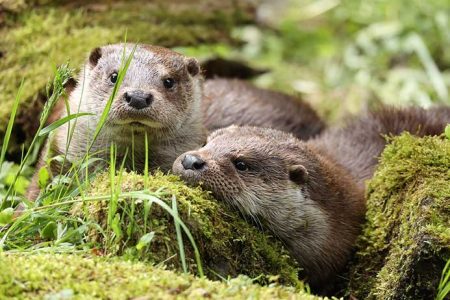
As no works must take place within 30m of an Otter resting place or within 150m of a natal den the Otter survey must include all land on-site and at least 150m beyond the site boundary where suitable habitat exists.
These surveys can take place at any time of year but should not take place immediately after high water levels as any evidence of their presence might have been washed away.
If potential natal dens are identified further surveys may be required to establish if they are used for breeding.
In the event that Otters are found on-site or within 150m of the site boundary, an Otter Mitigation Plan may be required.
Smooth Newt Surveys
The smooth newt Lissotriton vulgaris is fully protected under Schedules 5 to 7 of the Wildlife Order (Northern Ireland) 1985 (as amended).
A smooth newt survey may be required on sites where suitable breeding habitat such as ponds or areas of standing water occurs on-site or within proximity to the site boundary.
The survey involves a daytime search for adult newts and up to 4 night-time surveys between mid-March and mid-June using torches to search for newts in the waterbodies.
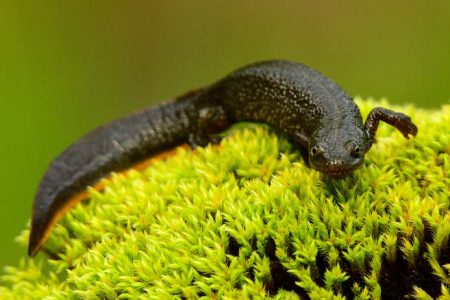
The survey can only be conducted under a site-specific licence issued by the Northern Ireland Environment Agency (NIEA).
In the event that newts are confirmed as being present, an additional 2 survey visits will be required to provide an estimate of population size.
In the event that Newts are found on-site or within 200m of the site boundary, a Newt Mitigation Plan may be required.
Pine Marten & Red Squirrel Surveys
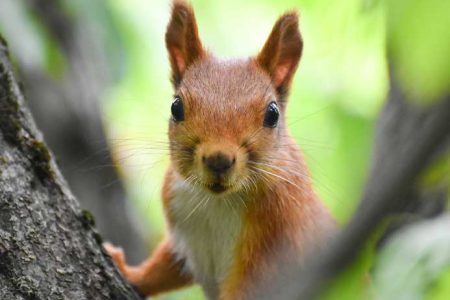
Red squirrels and their dreys and Pine Martens and their nests are protected under Article 10 of the Wildlife (Northern Ireland) Order 1985 (as amended).
We can undertake presence / absence surveys for these mammals by searching an area extending to 30m surrounding the redline boundary of an application site.
This area is surveyed for signs of red squirrel and pine marten activity including the occurrence of red squirrel dreys, bark stripping, chewed pine cones and pine marten nests.
ATEC NI’s commitment to best practice is evident in their adherence to industry standards. All surveys and monitoring activities are conducted in strict accordance with the Chartered Institute of Ecology and Environmental Management (CIEEM) Guidelines and the Northern Ireland Environment Agency (NIEA) specific survey requirements.
This dedication to professional standards ensures the accuracy, reliability, and legal defensibility of their work, making ATEC NI a trusted partner in ecological consultancy in Northern Ireland.


